
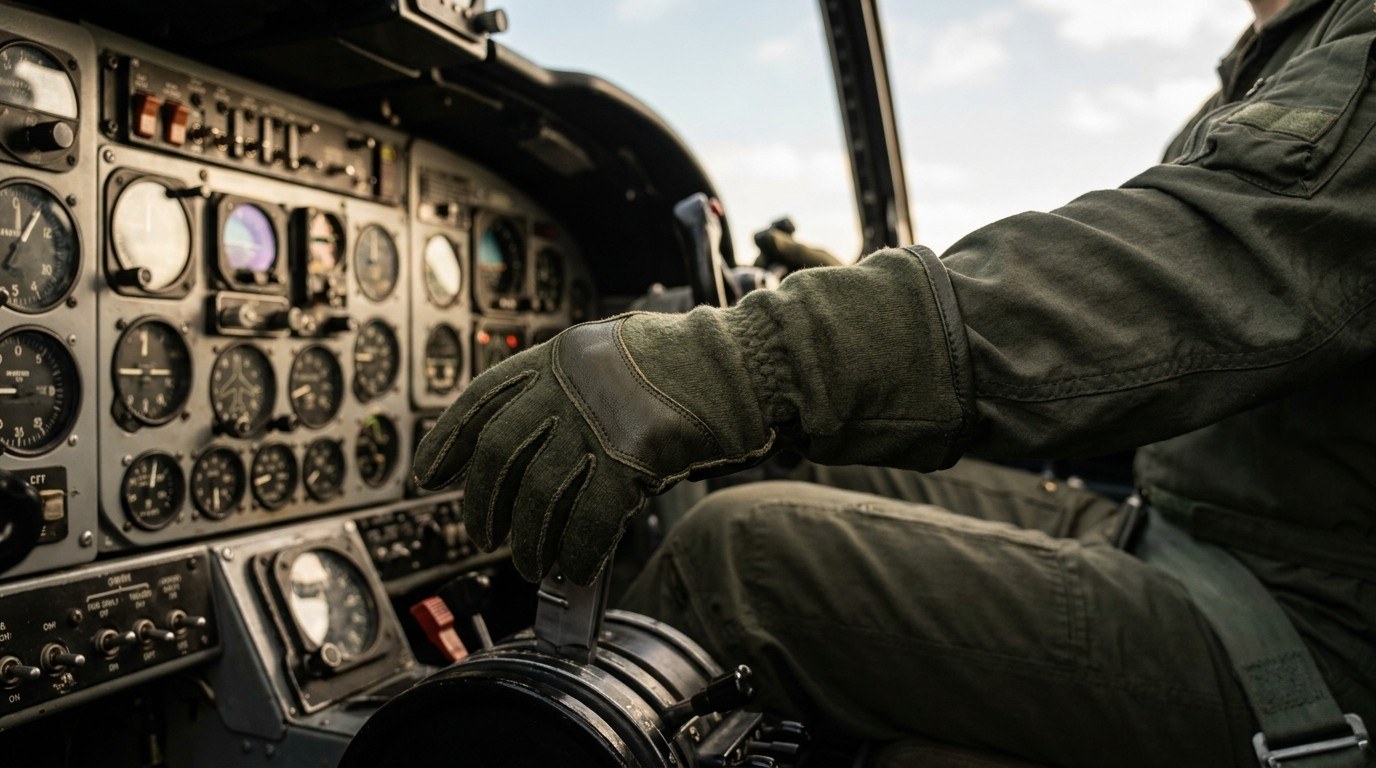
Flying is a precise, controlled activity, but the environment around an aircraft is full of energy: fuel, hydraulics, electrical systems and engines. In rare but serious situations, fire can spread in seconds. That is why aircrew clothing is treated as safety equipment rather than simple uniform.
Fire resistant flight gear uses fibres that do not easily ignite and that resist melting. Nomex, a well known example, is used worldwide in flight suits, gloves and socks. Ordinary synthetic fabrics can melt under heat and stick to skin, which can turn a bad situation into a worse one. A fire resistant fabric helps to avoid that, giving a wearer vital time to react.
Protect the whole body, not just the torso
Hands and feet are easily overlooked. Flying gloves and socks made from fire resistant material complete the protection offered by a coverall, and a gap at the wrist or ankle is a gap in the system. At Al Baraka International, our flying coveralls, gloves and socks are made to work together, and we manufacture fire resistant and non fire resistant versions depending on what your operation requires.
Fit is part of safety
A coverall that is too loose can snag on controls, while one that is too tight restricts movement and can crack under strain. Aircrew should be measured while seated, since the posture of a cockpit differs from standing.
Care for fire resistant garments
Follow the label, avoid bleach and softeners, and inspect for thin patches, tears and contamination with fuel or oil. Replace any garment that is damaged.
We have supplied flying coveralls, jackets, gloves, socks and helmet bags to Army Aviation for years. If you are choosing flight wear for your own team, our staff can talk through the options with you.